
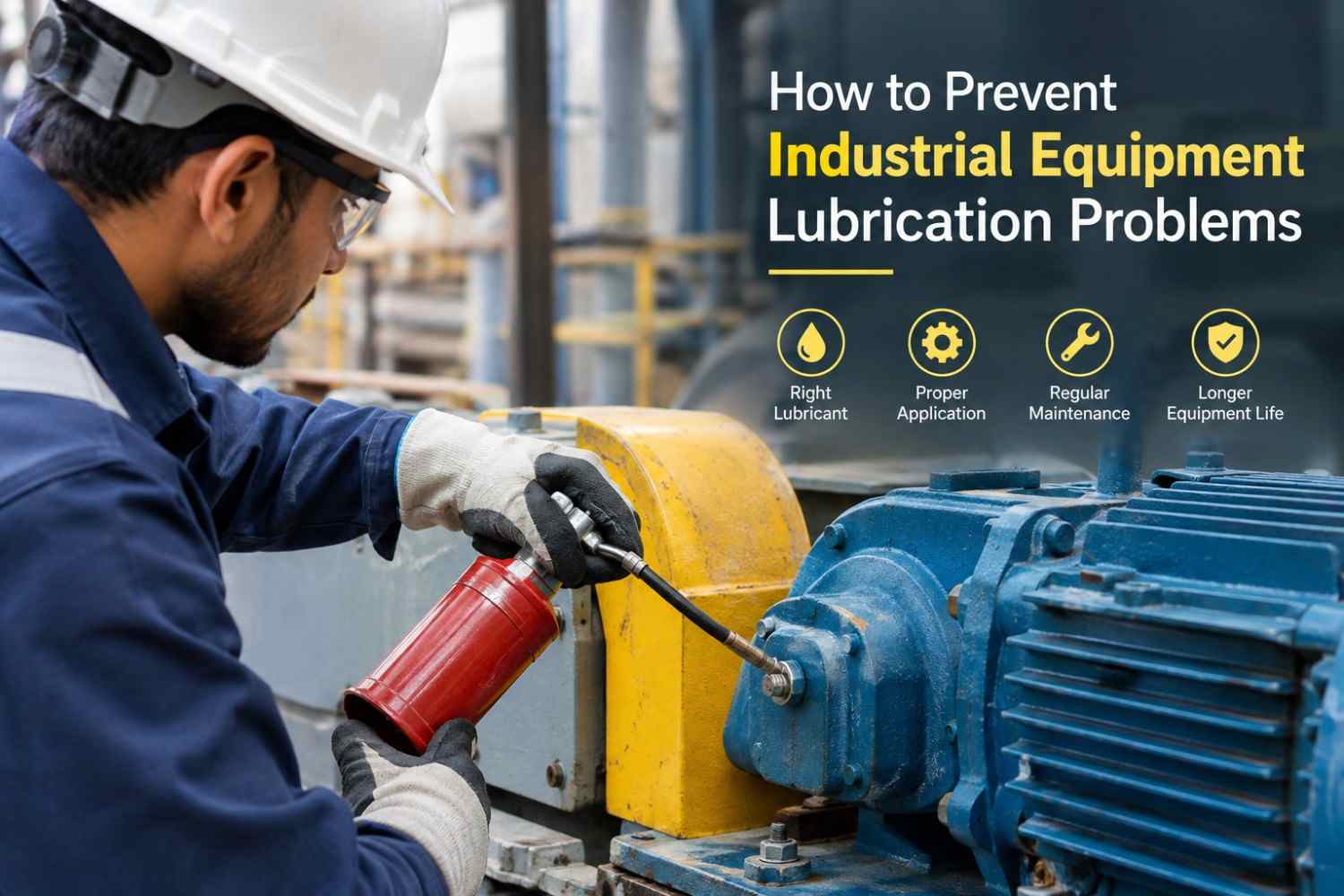
Industrial equipment lubrication problems can be prevented by selecting the correct lubricant, controlling contamination, using the right lubricant quantity, monitoring equipment condition, and following a preventive maintenance schedule. In UAE industrial environments, high temperatures, dust, heavy loads, and continuous equipment operation make proper lubrication especially important.
A proper lubrication strategy helps reduce friction and component wear, control operating temperatures, improve equipment reliability, and minimize unexpected maintenance. Working with experienced lubricant suppliers in UAE can also help businesses select lubrication products based on specific equipment and operating requirements.
What Causes Industrial Equipment Lubrication Problems?
Industrial lubrication problems can occur for several reasons, including:
- Using the wrong lubricant or viscosity
- Applying too much or too little lubricant
- Contamination from dust, dirt, water, or metal particles
- Lubricant oxidation or thermal degradation
- Incorrect lubricant storage and handling
- Extended lubrication intervals
- Lack of regular equipment monitoring
Identifying these issues early can help prevent premature component wear and unexpected equipment downtime.
1. Select the Correct Industrial Lubricant
Choosing the correct lubricant is the foundation of an effective lubrication program. Different industrial machines require lubricants with specific viscosity, temperature resistance, load-carrying capacity, oxidation stability, and performance characteristics.
Before selecting a lubricant, review the equipment manufacturer's recommendations and consider the operating temperature, equipment speed, load, pressure, environment, and exposure to dust or water.
Businesses considering Mobil industrial lubricants should select the appropriate product according to the specific equipment application rather than choosing a lubricant based only on brand or general usage.
2. Prevent Lubricant Contamination
Contamination is a major cause of industrial lubrication problems. Dust, dirt, moisture, chemicals, and metal particles can enter lubrication systems during equipment operation, storage, or lubricant transfer.
This is particularly important for UAE industries where dusty environments and high temperatures can create challenging operating conditions.
To reduce contamination, keep lubricant containers sealed, store products in clean and dry areas, use clean dispensing equipment, and prevent dirt or water from entering lubrication systems. For critical machinery, lubricant or oil analysis can help identify contamination before it causes significant damage.
3. Use the Correct Amount of Lubricant
Both under-lubrication and over-lubrication can negatively affect equipment performance.
Under-lubrication increases friction, heat, and component wear. Over-lubrication can generate excessive heat, cause leakage, damage seals, and waste lubricant.
Always follow the equipment manufacturer's recommended lubricant quantity and application interval. Maintenance teams should also clearly identify lubrication points and record lubrication activities.
4. Monitor Equipment for Early Warning Signs
Regular equipment monitoring can help identify lubrication problems before they become serious failures.
Maintenance teams should watch for unusual noise, excessive vibration, increased operating temperature, lubricant leakage, abnormal oil appearance, increased lubricant consumption, or unexpected component wear.
For critical equipment, condition monitoring and oil analysis can provide additional information about lubricant degradation, contamination, and internal component wear.
5. Follow a Preventive Lubrication Program
A preventive lubrication program ensures that lubrication is performed consistently rather than only after equipment develops a problem.
The program should specify which equipment needs lubrication, which lubricant should be used, how much should be applied, how frequently it should be applied, and when lubricant inspection or replacement is required.
Maintaining accurate service records can also help identify recurring lubrication issues and improve maintenance planning.
6. Store and Handle Lubricants Correctly
Proper storage is essential for maintaining lubricant quality before it is used. Lubricants should be kept in properly sealed containers and protected from excessive heat, moisture, dust, and other contaminants.
Clearly label lubricant containers to prevent accidental mixing of incompatible products. Use clean transfer equipment and follow the manufacturer's storage and handling recommendations.
Why Is Proper Lubrication Important for UAE Industries?
Industrial equipment in the UAE may operate under demanding conditions, including high ambient temperatures, airborne dust, heavy loads, and extended operating cycles. These conditions can influence lubricant performance and increase maintenance requirements.
Selecting suitable Mobil industrial lubricants and purchasing them from reliable lubricant suppliers in UAE can help businesses develop an effective lubrication strategy for their machinery.
However, lubricant selection should always be based on the equipment manufacturer's specifications, application requirements, and actual operating conditions.
Industrial Equipment Lubrication Best Practices
For a reliable lubrication program, businesses should:
- Use the lubricant recommended for the specific equipment.
- Follow the correct lubricant quantity and application frequency.
- Keep lubricants protected from dust, dirt, and moisture.
- Store and handle lubricants according to manufacturer recommendations.
- Inspect equipment regularly for leaks, vibration, heat, and unusual noise.
- Use oil analysis for critical machinery where appropriate.
- Maintain accurate lubrication and maintenance records.
- Review lubrication requirements when operating conditions change.
Conclusion
Preventing industrial equipment lubrication problems requires a systematic maintenance approach. The most important steps are choosing the right lubricant, preventing contamination, applying the correct quantity, monitoring equipment condition, and following a preventive lubrication schedule.
For businesses operating in the UAE, selecting appropriate industrial lubricants is particularly important because of demanding environmental and operating conditions. Experienced lubricant suppliers in UAE can help businesses identify suitable lubrication products based on their equipment and applications.
Apex Lube provides industrial lubrication solutions and can help businesses evaluate their lubricant requirements according to equipment specifications and operating conditions.
Contact Apex Lube today to discuss your industrial lubrication requirements and find the right lubrication solution for your equipment.
Frequently Asked Questions
1. How can industrial equipment lubrication problems be prevented?
Industrial lubrication problems can be prevented by selecting the correct lubricant, applying the recommended quantity, controlling contamination, monitoring equipment condition, and following a preventive maintenance schedule.
2. What are the common causes of lubrication failure?
Common causes include incorrect lubricant selection, contamination, under-lubrication, over-lubrication, lubricant degradation, improper storage, and failure to follow recommended maintenance intervals.
3. Why is lubricant contamination harmful to industrial equipment?
Dust, dirt, water, chemicals, and metal particles can reduce lubricant performance and increase component wear. Proper storage, clean handling, filtration where appropriate, and lubricant analysis can help control contamination.
4. How should I choose Mobil industrial lubricants?
Mobil industrial lubricants should be selected according to the equipment manufacturer's specifications and application requirements. Factors such as viscosity, operating temperature, load, speed, and operating environment should be considered.
5. How can lubricant suppliers in UAE help businesses?
Lubricant suppliers in UAE can help businesses identify suitable industrial lubricants, understand application requirements, and develop effective lubrication practices based on equipment and operating conditions.