
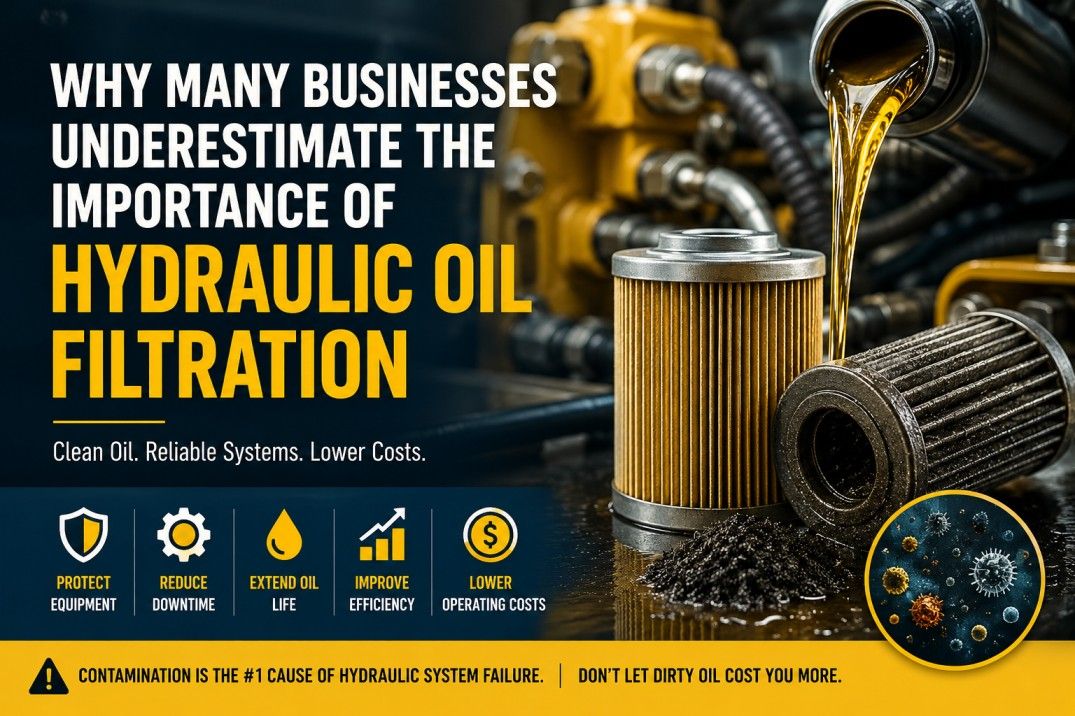
In industries that rely heavily on hydraulic systems, equipment performance depends on more than just machine quality. One of the most overlooked factors behind operational efficiency is the condition of the hydraulic oil running through the system. Many businesses focus on machinery maintenance while underestimating the role of proper hydraulic oil filtration.
From construction and manufacturing to marine and logistics operations in the UAE, hydraulic systems are exposed to dust, heat, moisture, and contamination daily. Without effective filtration, even premium hydraulic oil can lose its effectiveness quickly, leading to equipment failure, costly downtime, and reduced productivity.
This blog explores why hydraulic oil filtration matters more than many businesses realize and how proper maintenance can significantly improve equipment lifespan and operational reliability.
Understanding the Role of Hydraulic Oil
Hydraulic oil does much more than lubricate machinery. It transfers power, reduces friction, controls heat, and protects internal components from corrosion and wear. However, when contaminants enter the system, the oil can no longer perform these functions effectively.
Common contaminants include:
- Dust and dirt particles
- Water contamination
- Metal debris from component wear
- Sludge and oxidation deposits
- Air bubbles and foam
Even microscopic contaminants can damage pumps, valves, cylinders, and seals over time.
According to industry studies, nearly 70–80% of hydraulic system failures are linked to contamination issues. This highlights why hydraulic oil filtration should never be treated as an optional maintenance step.
Why Businesses Often Ignore Filtration Problems
Many companies in the UAE operate in demanding industrial environments where machinery runs continuously. Yet hydraulic oil filtration is frequently overlooked because contamination damage is usually gradual rather than immediate.
Here are a few common reasons businesses underestimate filtration:
1. Equipment Appears to Function Normally
Hydraulic systems may continue operating even when contamination levels rise. Since the damage develops slowly, operators often fail to notice performance loss until a major breakdown occurs.
2. Focus Is Placed on Oil Replacement Instead of Filtration
Some businesses believe changing hydraulic oil regularly is enough. However, replacing oil without addressing filtration allows contaminants to continue circulating through the system.
3. Filtration Is Seen as an Extra Expense
High-quality filters and maintenance programs may seem costly initially. In reality, filtration reduces repair costs, minimizes downtime, and extends machinery life, making it a cost-saving investment.
The Hidden Costs of Poor Hydraulic Oil Filtration
Ignoring filtration can create serious operational and financial consequences.
Increased Equipment Wear
Contaminated hydraulic oil acts like abrasive material inside machinery. Pumps, valves, and seals wear out faster, reducing system efficiency and increasing maintenance frequency.
Higher Energy Consumption
Dirty hydraulic systems require more energy to operate efficiently. When components struggle due to contamination, machines consume more power and generate excess heat.
Unexpected Downtime
In industries such as construction, manufacturing, and shipping, downtime can result in significant financial losses. A failed hydraulic system may halt entire operations and delay project timelines.
Reduced Oil Life
Without proper filtration, hydraulic oil oxidizes faster and loses its protective properties. Businesses end up replacing oil more frequently, increasing operating costs.
UAE Conditions Make Filtration Even More Important
The UAE’s industrial environment creates additional challenges for hydraulic systems. High temperatures, desert dust, humidity in coastal areas, and continuous equipment usage all contribute to contamination risks.
For example, construction machinery operating in Dubai or Abu Dhabi is constantly exposed to fine sand particles that can infiltrate hydraulic systems. Similarly, marine and offshore industries face moisture contamination that affects oil stability.
In these conditions, proper hydraulic oil filtration becomes essential for maintaining equipment reliability and avoiding expensive failures.
Best Practices for Effective Hydraulic Oil Filtration
Businesses can significantly improve hydraulic system performance by following a proactive maintenance approach.
Use High-Quality Filters
Not all filters provide the same level of protection. Choosing filters designed for the specific hydraulic system helps remove harmful contaminants efficiently.
Monitor Oil Condition Regularly
Routine oil analysis helps detect contamination before serious damage occurs. Monitoring viscosity, particle levels, and moisture content provides valuable maintenance insights.
Replace Filters on Schedule
Waiting until filters clog completely can reduce system efficiency. Scheduled replacement ensures consistent filtration performance.
Maintain Clean Storage and Handling
Even new hydraulic oil can become contaminated during storage or transfer. Using sealed containers and clean handling practices prevents contamination before the oil enters the system.
The Long-Term Business Benefits
Investing in hydraulic oil filtration delivers measurable long-term advantages:
- Longer equipment lifespan
- Reduced maintenance costs
- Improved operational efficiency
- Lower downtime risks
- Better energy performance
- Enhanced workplace productivity
Businesses that prioritize hydraulic oil cleanliness often experience fewer breakdowns and more reliable operations overall.
Conclusion
Many businesses underestimate the importance of hydraulic oil filtration because contamination damage is not always immediately visible. However, poor filtration can silently reduce equipment performance, increase operational costs, and shorten machinery lifespan.
In demanding UAE industrial environments, maintaining clean hydraulic oil is critical for achieving reliable and cost-effective operations. Proper filtration is not just a maintenance task — it is a strategic investment in equipment protection and business continuity.
For businesses looking for dependable lubrication solutions and expert support, Apex Lube provides high-quality hydraulic oil products designed to meet the demanding requirements of modern industries.